SCRIPTS: Latin
Vultus’ answers possess a perspectival stroke distinction and experimental reason, founded on the Principle of Monylop.₁ Without deceptions of proportional perfection, Vultus extends on the architectonical condition of Between The Temples, composed by D. G. M. in 2020, with self-subject research into acute text-reading side effects marked by insightful psychometrics.₂
ASDFGHJKL
ZXCVBNM
2.Vultus arrives to indicate an unaffiliated disposition of angular components under situational ruin. Escorted to abandon a cognitive belief and state of accumulated comprehension, and scarped at the thought of regulated classification, the lowercase characters set basis to Vultus’ pursuit in reading between the lines.
3.
Reading in paragraphs, Vultus’ self-contained cenders estimate a resistant division, allowing the eye to expand leading. Notwithstanding the will to print, in alliance with this primary process of transfer, Vultus is in nature of poised dimension and predicts a narrowed column, thus accommodating to an on-screen prospect.₃
4. Few ink traps highlight closer strokes but seldom prise junctions. Rather, many of the connections fuse and absorb inherent voids. A constructive determination printing type with black buoyancy and a contrast less vivid than drilled by craze. Certain junctions preserve calligraphic broadness, for example the lower case d, p and q [2].
asdfghjkl
zxcvbnm
5.Vultus declares a neutral upper and lower case disposition, all vertical stroke widths remain uniform throughout and distribute serifs via kinked tangents. These semi-bracketed serifs come confronted with their Y-axis, some vary slightly from one another, yet their trajectory remains visually committed. Logically consequential, some serifs further describe an unconcealed course of attributed transaction from their divergent, yet intercepted, published requests. And some characters fulfil a straight cut serif, for example the lower case f, k and p [2].
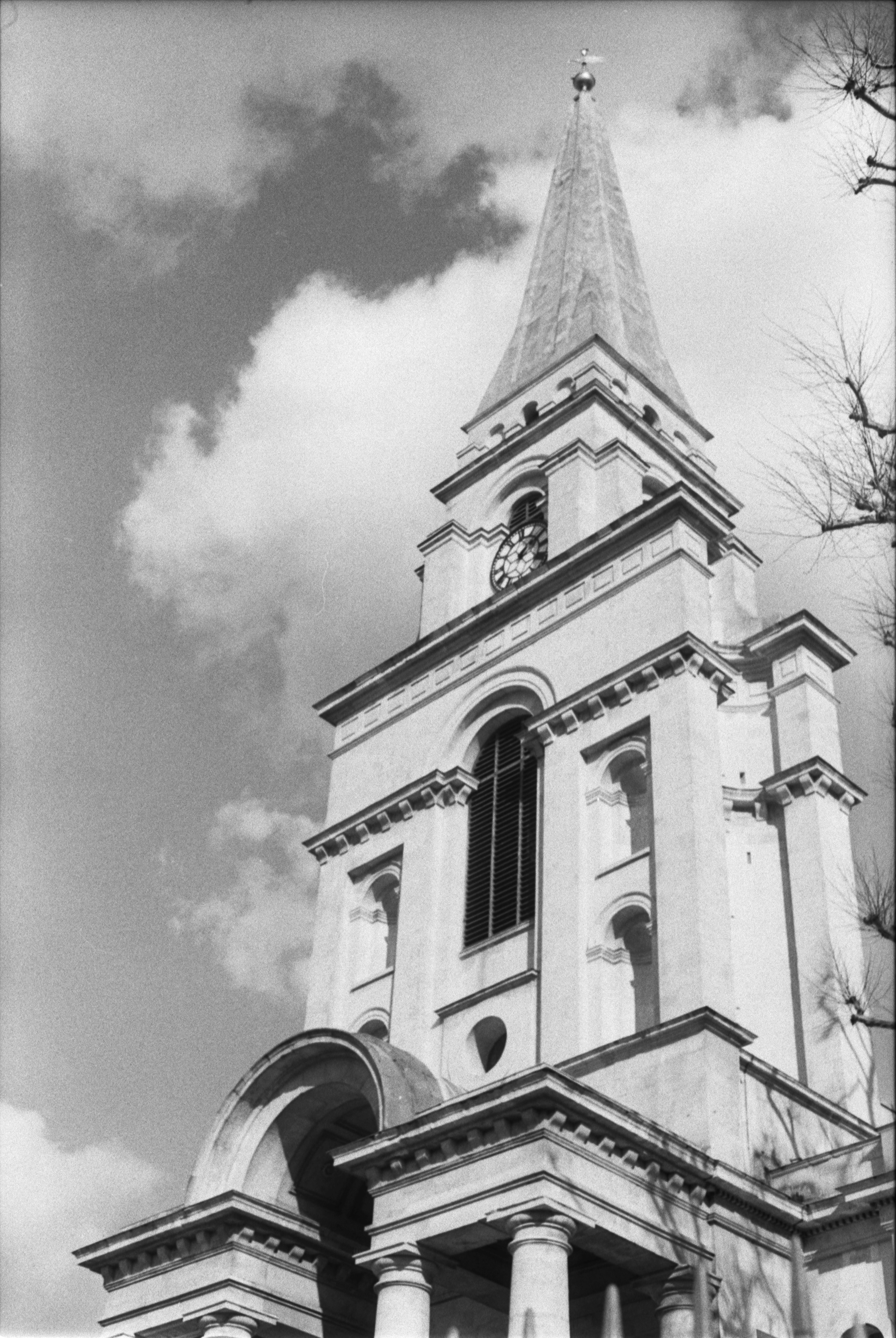 Fig.4Christ Church Spitalfields, London E1.
1714—29, N. Hawksmoor
© 2020, D. G. M.
6.During the turn of the year 2020 D. G. M. conducted research into six London churches by architect Nicholas Hawksmoor (1661–1736), which laid the foundations to the initiation of Vultus.₄ As to be expected at these landmarks, engraved by a bygone hand, the stereoscopical letterforms of gravestone memorial inscriptions, were thought appropriate to complement his impression.
7. During this period D. G. M. also explored the fantasies of architect Sir John Soane (1753–1837), revisiting his home in Holborn and founding correspondence with staff of the museum. The bypass in the lower case letter a in Vultus portrays a reappearing Soaneian female acolyte, her incurvate façade observing a pointed crown [2].₄
My farewell Eurostar return to England as result of Brexit, at Brussels terminal was met by a handsome Scottish piper, in full tartan attire, playing enchantingly loud. Observant and close, him and only I, the chanter drops from his hands and ricochets a shard of horn towards my feet. I crouched down to pick it up, noticing that the piece had played a vital role in separating the bottom two holes which formed note B. On handing over the black fracture, with a deeply rooted gaze he uttered, “It’s Broken”.
Throughout my departure, we conversed by sight. No longer could he play, the terminal had fallen silent. Yet it were he whom, centrally infinite, welcomed my retreat from the heart of the European Union, regardless of my vote to Remain.
ᴀꜱᴅꜰɢʜᴊᴋʟ
ᴢᴠʙɴᴍ
8.Only 50 units above an amplified x height, the small cubic capitals uphold the broad stroke pitch evident throughout. Perhaps most evident here is the contrast to Vultus, which exposes cross-linearity to endure illumination. These sporadic central, horizontal strokes elevate each character and consider a ‘by-path’ contingency hereafter variable [6].
9. Each digit terminates from the scene of a sustained calligraphic flourishing, anchored to the resolution of the Vultus serif, yet aleviated by deepened proportions [7].
10. The protuberant energy to the ampersand shows studious signs of earshot coquetry, a confident and unclassified solitary butterfly. Another causation of Vultus includes the melded @ symbol, which reveres towards another non-binary typographic model, the variable duality and thoroughfare, shapeshifting doppler to the effect of ‘at’ [8].
£€¥¢Ææ…;/|\™®
₁ The Monylop Principle → 0/5 unit computation matrix under which all D. G. M. typefaces are composed, self-effectuated as part of his studies at Reading University with his monospaced typeface Monylop in 2019.
₂ ‘Where such research does not exist, you have no option but to experiment on yourself’. While you’re reading by Gerard Unger, 34 (Mark Batty Publisher, New York, 2007).
Further reading: Typografie als wetenschap. – Typography as Vehicle of Science. By Prof. G.A. Unger. Faculteit der Kunsten, Universiteit Leiden, (Uitgeverij De Buitenkant, Amsterdam, 2007).
Gerard Unger (1942–2018) was a professor of typography at Reading University.
₃ The fount is manually hinted for pixel clarity at small-scale. Hinting gives display units specific instructions for rasterising certain areas of each letterform to the pixels on-screen, in order to diminish blurring of small-scale text contours.
₄ Read the study on Nicholas Hawksmoor and more on the Soane Obelisk in Between The Temples →
₅ Architect Sir John Soane was born in Goring-on-Thames, 10.5 miles east of Reading. In 1804 Director of the Bank of England Edward Simeon commissioned Soane to design the ‘Simeon Monument’ at Reading Market Place [Fig].
A Vultus Italic variant is currently under construction.
Thank you James Mosley (1935–2025), Gerry Leonidas and Fred Smeijers for your support.
